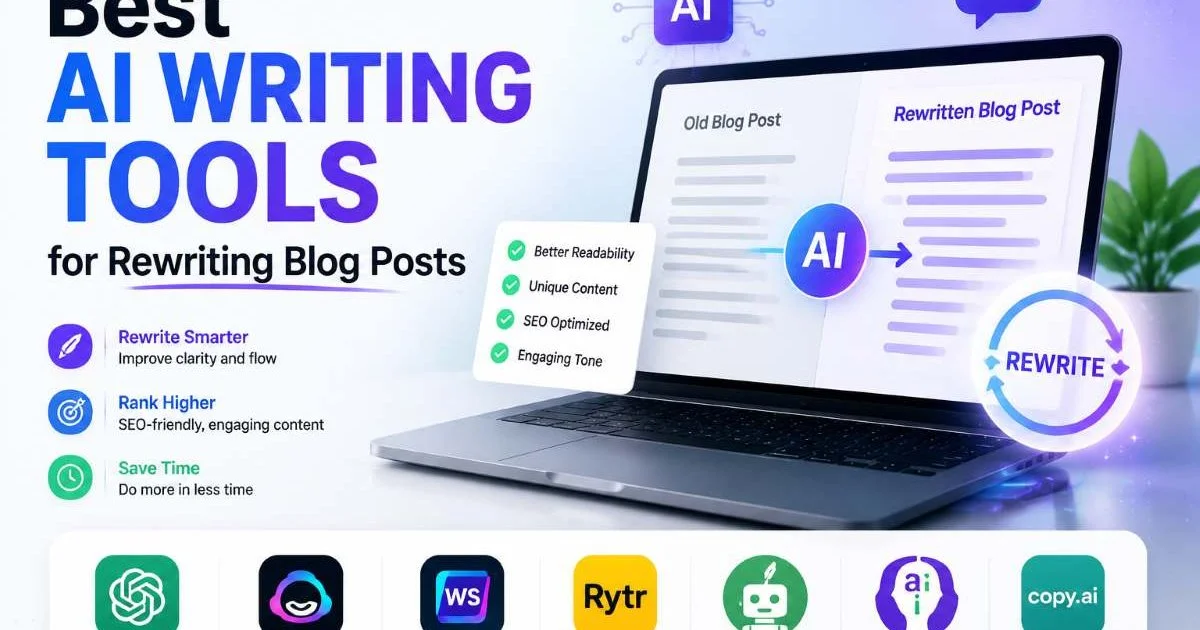
AI writing tools have become indispensable for bloggers who want to transform rough drafts into polished, publication-ready content. Whether you're repurposing an old post, tightening a rambling first draft, or adapting content for a new audience on Medium, the right rewriting tool can save hours of manual editing.
But with dozens of options flooding the market, picking the best one for your specific workflow is harder than it sounds. The stakes are real: a poorly rewritten article can feel robotic, trigger plagiarism detectors, or strip away the voice that makes your writing yours. This guide walks you through the practical steps of choosing, testing, and using AI writing tools to rewrite blog posts effectively.
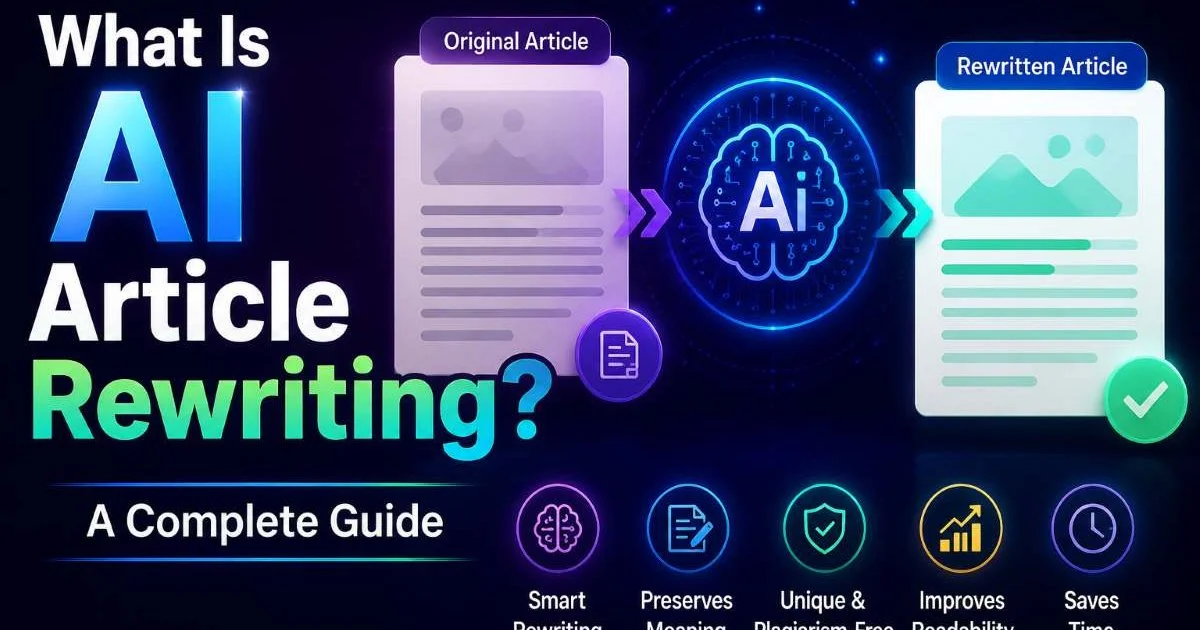
If you're new to the concept, our complete guide on AI article rewriting covers the foundational principles worth understanding first. By the end, you'll have a clear system for producing better content faster.
Key Takeaways
- Not all AI rewriting tools preserve your original voice; test before committing.
- Pair AI rewriting with manual editing for the most natural-sounding results.
- Free tiers work for experimentation, but paid plans unlock serious productivity gains.
- Medium's algorithm rewards readability, so use tools that optimize sentence structure.
- Always run rewritten content through a plagiarism checker before publishing.
Step 1: Understand What AI Rewriting Tools Actually Do
Before you start testing tools, you need to understand the difference between simple synonym swapping and genuine AI rewriting. Early "spinner" tools from the 2010s would replace individual words with synonyms, producing garbled, unreadable text. Modern AI writing tools use large language models to understand context, tone, and intent. They restructure entire sentences and paragraphs while preserving your core message, which is a fundamentally different approach.
The best tools today can adjust reading level, shift tone from casual to professional, and even restructure arguments for better flow. Some specialize in specific tasks: Grammarly focuses on grammar and clarity improvements, while tools like QuillBot offer dedicated paraphrasing modes with adjustable creativity levels. Others, like Jasper and Copy.ai, are built for generating new content but include robust rewriting features that work well for blog post revision.
Paraphrasing vs. Full Rewriting
Paraphrasing tools rephrase existing text at the sentence level. Full rewriting tools can reorganize your entire piece, suggest new section headers, and reframe your argument. For Medium writers specifically, full rewriting tends to produce better results because the platform rewards strong narrative structure, not just clean sentences. Understanding how AI rewriting improves your Medium articles can help you pick the right approach.
Start by feeding your tool a single paragraph, not your entire article. This lets you gauge quality before investing time in a full rewrite.
One common misconception is that AI rewriting means handing over creative control entirely. In practice, the most effective approach treats AI as a collaborative editor. You provide the raw material, the ideas, the expertise. The tool handles sentence-level polish and structural suggestions. Think of it as working with a very fast, very patient copy editor who never gets tired of revising the same paragraph six times.
Step 2: Compare the Top AI Writing Tools for Rewriting
The market for AI writing tools is crowded, so narrowing your options requires knowing what matters most for blog post rewriting. Speed, output quality, tone preservation, and pricing all vary dramatically between platforms. For a broader comparison of available options, this roundup of AI blog writing tools provides useful context on how different platforms stack up across categories.
Tool Comparison Table
| Tool | Best For | Free Tier | Starting Price | Tone Control |
|---|---|---|---|---|
| QuillBot | Sentence-level paraphrasing | Yes (125 words) | $9.95/mo | 7 modes |
| Jasper | Full article rewriting | 7-day trial | $49/mo | Custom brand voice |
| Wordtune | Clarity and conciseness | Yes (10 rewrites/day) | $9.99/mo | Casual/Formal toggle |
| ChatGPT (GPT-4) | Flexible, prompt-based rewriting | Yes (GPT-3.5) | $20/mo | Prompt-dependent |
| Grammarly | Grammar, tone, and style | Yes (basic) | $12/mo | 4 tone profiles |
| Copy.ai | Marketing-focused rewrites | Yes (2,000 words/mo) | $49/mo | 25+ templates |
For aspiring Medium writers on a budget, QuillBot and Wordtune offer the best value. Their free tiers let you rewrite enough content to develop a feel for what works. ChatGPT provides the most flexibility because you control the instructions through custom prompts, but that flexibility requires more skill to use effectively. You need to write good prompts to get good output, which is itself a learning curve worth investing in.
Jasper and Copy.ai sit at a higher price point but offer features that matter for serious content producers: brand voice settings, bulk processing, and integrations with publishing platforms. If you're publishing multiple articles per week, the time savings justify the cost. For writers exploring AI content rewriting tools for Medium writers specifically, these premium options also tend to handle Medium's formatting requirements more gracefully.
Free tiers often impose word limits or watermark outputs. Always check the fine print before relying on a free tool for your publishing schedule.
Step 3: Set Up Your Rewriting Workflow
Owning the right tool is only half the equation. Without a repeatable workflow, you'll waste time experimenting with settings on every article. The most productive writers treat AI rewriting as a defined step in their content pipeline, not an ad hoc fix they apply randomly. Building a consistent process also helps you maintain quality across articles, which is especially important if you're growing an audience on Medium.
The Three-Pass Method
A practical workflow for rewriting blog posts involves three distinct passes. On the first pass, feed your rough draft into the AI tool with instructions focused on structure: reorganize paragraphs, improve transitions, and suggest better headings. On the second pass, focus on sentence-level clarity. Ask the tool to shorten long sentences, eliminate passive voice, and improve readability. The third pass is entirely manual, where you read the output aloud and restore your personal voice wherever the AI flattened it.
"The best AI-rewritten articles are the ones where readers can't tell AI was involved at all."
If you're working from rough notes or an early draft, you might benefit from learning how to turn a draft into a Medium article with AI, which covers the earlier stages of the pipeline. Once your draft has been shaped into a coherent piece, the rewriting workflow described here takes over to bring it to publication quality. These two processes complement each other naturally.
A real example: say you have a 2,000-word draft about productivity apps. Your first pass through Jasper might restructure the piece from a list format into a narrative comparison. Your second pass through Wordtune tightens each sentence and flags unnecessary filler. Your third pass, done manually, adds a personal anecdote about your own experience with these apps and adjusts the opening hook. The whole process takes roughly 45 minutes instead of the two to three hours a full manual rewrite would require.
Save your best prompts in a document. Reusing proven prompts across articles creates consistency and saves time on every rewrite.
Timing matters, too. Many writers make the mistake of running their draft through an AI tool immediately after writing it. You'll get better results if you step away for a few hours or overnight, then return with fresh eyes. This gap lets you approach the AI output more critically. You'll catch awkward phrasings, factual errors, and tonal shifts that you'd miss if you jumped straight from writing to rewriting in one sitting.
Step 4: Evaluate and Refine Your Output
Every AI writing tool produces text that needs human evaluation. Even the best models hallucinate facts, introduce subtle inaccuracies, or generate phrases that sound polished but say nothing meaningful. Your job after running the tool is to verify, refine, and personalize. This step separates forgettable AI-generated content from genuinely useful articles that build reader trust and engagement on platforms like Medium.
What to Check Before Publishing
Start with a plagiarism check. Tools like Copyscape or Originality.ai can detect whether your rewritten content too closely mirrors existing published work. This is not optional. Medium has its own distribution algorithm that deprioritizes content flagged as unoriginal, and republished or overly similar content can get your account restricted. Running a quick scan takes two minutes and protects your reputation.
Never publish AI-rewritten content without verifying all facts and statistics. AI tools frequently generate plausible-sounding but incorrect data.
Next, evaluate readability. Hemingway Editor (free, browser-based) gives you a grade-level score and highlights complex sentences, passive voice, and adverb overuse. For Medium, aim for a grade 6 to 8 reading level. This doesn't mean dumbing down your ideas; it means expressing them with directness and clarity. The same principles apply whether you're rewriting a blog post or, say, polishing a resume with AI, as this guide on choosing the best LLM for resume writing illustrates in a different context.
Finally, check for voice consistency. AI tools sometimes shift between formal and casual registers within the same piece, creating a jarring reading experience. Read your article from start to finish and listen for tonal shifts. Does the opening sound like you? Does the middle section suddenly feel like a corporate whitepaper? Small manual adjustments at this stage make the difference between content that feels authentically written and content that reads like it was assembled by committee.
One final check worth building into your routine: test your headlines and subheadings separately. Copy them into a list and read them in sequence. They should tell a coherent story on their own, guiding a skimming reader through your key points. Many AI tools generate technically correct subheadings that lack the specificity or punch needed to hold attention on a platform as competitive as Medium.

Frequently Asked Questions
?How do I use the three-pass method for rewriting blog posts?
?Is QuillBot or Jasper better for rewriting existing blog posts?
?Are free tiers of AI rewriting tools actually worth using?
?Can AI rewriting tools trigger plagiarism detectors on Medium?
Final Thoughts
The best AI writing tools for rewriting blog posts are the ones that fit your specific workflow, budget, and voice. No single tool dominates every category, and the smartest approach is to combine two or three tools at different stages of your editing process.
Treat AI as your collaborative partner, not your replacement. The writers who thrive on Medium will be those who use these tools to amplify their unique perspective rather than homogenize their voice into something generic and forgettable.
Disclaimer: Portions of this content may have been generated using AI tools to enhance clarity and brevity. While reviewed by a human, independent verification is encouraged.